WRPF: The World Raw Powerlifting Federation
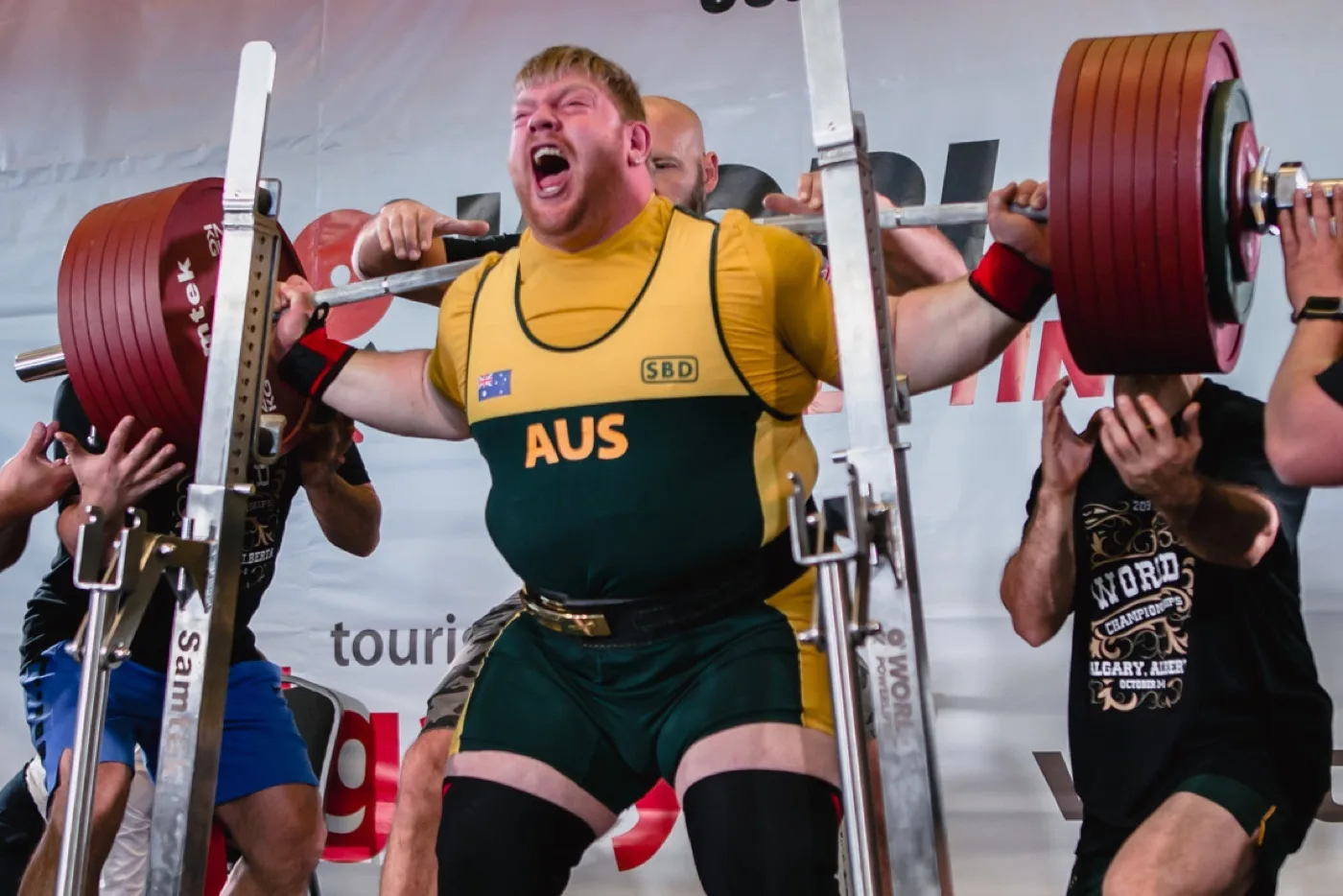
Federation rules decide how platform attempts, judging, records, equipment categories, and testing status should be read. Source: Wikimedia Commons.

WRPF results are easy to misread if you bring IPF assumptions with you.
A lifter totals 1,000 kg. The squat is in wraps. The meet may be tested or non-tested. The bar may be a deadlift bar rather than the stiff bar used in IPF. The federation may recognize raw, classic, push-pull, bench-only, deadlift-only, and regional record categories. The result may appear in OpenPowerlifting beside IPF, USPA, RPS, IPL, and dozens of other federations, but that does not make all totals interchangeable.
That is the point of a WRPF article: not to decide whether WRPF is "better" or "worse" than IPF, but to explain what a WRPF number means.
The World Raw Powerlifting Federation is one of the major non-IPF lanes of modern powerlifting. It is closely associated with Kirill Sarychev, the Russian raw bench press legend who presents himself publicly as founder and president of WRPF. Its public ecosystem includes rules, rank standards, records, ratings, calendars, protocols, doping-control material, regional representatives, judging and secretary structures, and affiliated strength-sport projects such as WEPF, WAF, and WSF.
This article explains what WRPF is, why its raw/classic terminology can confuse lifters, how its tested and non-tested contexts should be read, why its records matter, where it overlaps with Sarychev's wider strength-sport ecosystem, and what an athlete is really choosing when they compete WRPF.
For the broader sport, start with Powerlifting. For the historical background behind federation splits, read Powerlifting History. For the stricter Olympic-style model, read IPF. For training inside the three-lift system, see Powerlifting Training.
WRPF in one sentence
The World Raw Powerlifting Federation is an independent powerlifting federation focused on raw and wraps-friendly powerlifting, with records, rank standards, regional branches, tested and non-tested competition contexts, and a strong connection to Kirill Sarychev's Russian strength-sport organizing network.
The short version:
- Core sport: squat, bench press, and deadlift, plus push-pull, bench-only, deadlift-only, and related strength events depending on the national or regional branch.
- Identity: raw powerlifting outside the IPF model, with a major place for knee-wrap lifting.
- Rules: WRPF technical rulebooks describe Raw and Classic divisions differently: Raw allows knee sleeves, while Classic allows sleeves and/or knee wraps.
- Drug testing: WRPF has drug-tested divisions in some regions and meets, but it is not an IPF/WADA-style year-round testing system.
- Records: WRPF records appear in federation materials and independent databases such as OpenPowerlifting; several all-time raw records have been set at WRPF meets.
- Leadership and brand: Kirill Sarychev's official site identifies him as founder and president of WRPF; the federation site has operated around the broader Russian strength federation ecosystem since at least the mid-2010s.
- Best comparison: WRPF is closer to a modern independent powerlifting platform than to an Olympic-style governing body.
The useful mental model is this: IPF is standards-first institutional powerlifting; WRPF is lifter-facing independent powerlifting with more room for spectacle, wraps, non-tested lifting, and promoter-driven meets.
Why WRPF exists
Powerlifting has never had one center of gravity.
The IPF offers the most formal international pathway: national federations, world championships, strict technical rules, approved equipment lists, and WADA-code anti-doping. That gives IPF results a particular kind of legitimacy, but it also creates limits. Lifters who want looser equipment rules, different bars, wraps, bigger entertainment-oriented meets, or non-tested competition often leave the IPF lane.
WRPF exists in that independent space.
The federation's own rules and site infrastructure point to a practical goal: create a recognizable federation for raw powerlifting, records, rankings, standards, and competitions without copying the IPF model exactly. The WRPF rules page links technical rules for raw powerlifting, para-style bench press, folk bench, Russian bench, equipped WEPF lifting, armlifting, streetlifting, powersport, hip thrust, and log lift. That breadth matters. WRPF is not only one rulebook for the three powerlifts. It sits inside a wider strength-sport ecosystem.
This is one reason the federation has appeal. An athlete can enter a WRPF powerlifting meet, follow WRPF records, watch WRPF-linked professional meets, and still see the same organizational network around bench variants, powersport, armlifting, and streetlifting. That makes WRPF feel less like a single narrow federation and more like a platform for strength competitions.
The trade-off is clarity. More formats mean more labels. If a result is WRPF, you still need to know the event, equipment category, drug-testing status, country branch, meet level, and record context.
Raw and Classic: the terminology trap
WRPF terminology can surprise lifters who come from IPF.
In IPF language, Classic means raw/unequipped lifting: a singlet, belt, wrist wraps, and knee sleeves, but no knee wraps. In WRPF rulebook language, the terms can be different. The English WRPF technical rulebook text hosted in public document mirrors describes:
- Raw: non-supportive singlet, T-shirt, optional undershorts, socks, optional belt, shoes, optional single-ply wrist wraps, and knee sleeves. Knee wraps are not allowed.
- Classic: the same basic non-supportive equipment, but knee sleeves and/or knee wraps are allowed.
That creates an easy misunderstanding. A lifter who hears "Classic" may assume IPF Classic. In WRPF, Classic often means the wraps-friendly category. That matters because a wrapped squat and a sleeved squat are not the same performance environment.
The practical rule: always read the equipment category before interpreting a total.
A 900 kg Raw total and a 900 kg Classic/wraps total may both be impressive. They are not identical claims. Knee wraps can materially change the squat. They do not change the bench or deadlift, but because the total includes the squat, the whole total lives in a different context.
What WRPF powerlifting includes
WRPF technical rulebook text recognizes the familiar full-power sequence:
- Squat.
- Bench press.
- Deadlift.
It also recognizes other event structures, including push-pull, bench press only, deadlift only, and additional bench or strength variants depending on the regional rulebook and sanctioning body.
That matters because "WRPF result" is not specific enough. You need the event label:
- full power;
- push-pull;
- squat only;
- bench only;
- deadlift only;
- raw;
- classic/wraps;
- drug-tested;
- non-tested;
- national, state, regional, or world-record context.
The labels are not decoration. They define what the number means.
For ordinary lifters, the main pathway is still straightforward: train the squat, bench press, and deadlift, enter a meet, make attempts, and build a total. But WRPF's broader event menu helps explain why the federation attracts different kinds of lifters: full-power competitors, bench specialists, deadlift specialists, wraps lifters, and athletes who want a less IPF-like competition environment.
Judging and equipment: where totals move
The biggest practical difference between WRPF and IPF is not one single rule. It is the whole environment around the lift.
In IPF, the sport is built around very constrained equipment, strict commands, approved gear, and the same stiff bar across lifts. WRPF-style meets can feel more lifter-facing: wraps categories are prominent, deadlift bars may appear depending on the meet and regional rulebook, and the culture is less tied to Olympic-style standardization. That does not mean "anything goes." It means the comparison problem moves from "Was this strong?" to "Which rule environment produced this strength?"
Three details matter most.
First, the squat category changes the total. A lifter who squats in wraps has a different rebound profile from a lifter squatting in sleeves. The wraps do not bench or deadlift for the athlete, but the squat is large enough that the total changes meaning.
Second, bar selection changes the deadlift. A deadlift bar can bend before the plates leave the floor, which changes the starting mechanics. Lifters with strong positions and good patience can benefit from that slack. A stiff bar is a different test. This is why a WRPF deadlift should not be compared casually with an IPF deadlift without knowing the bar.
Third, judging culture still matters. A rulebook can define depth, pauses, lockout, and commands, but meet execution depends on referees. Independent federations often have more regional variation than mature Olympic-style bodies. That variation does not make every result invalid, but it means the best comparisons use meet video, protocols, and rule labels together.
The practical rule is simple: never compare totals without equipment, bar, testing, and meet context.
Drug-tested and non-tested contexts
WRPF is often described casually as a federation with both tested and untested lifting. That shorthand is useful, but it needs precision.
WRPF is not the IPF. It does not represent itself as an Olympic-style WADA-code system with year-round international testing obligations. Instead, drug testing is handled through meet and regional policies.
Public WRPF Americas rulebook text says competitions can be sanctioned as Drug Tested or Non-Tested. It states that drug-tested events should be labeled with "DT" in LiftingCast and the WRPF calendar, and that tests are conducted immediately after the competition on the top 10% of lifters by coefficient, with meet directors able to test additional athletes. Older WRPF technical rulebook text similarly describes a drug-tested division and testing of top Wilks scores.
WRPF UK publishes a tested-division policy that uses strict liability language and says WRPF UK does not recognize Therapeutic Use Exemptions for tested divisions. That policy is regional, but it shows how WRPF branches can add specific anti-doping implementation rules.
The honest interpretation is:
- WRPF can offer drug-tested competition.
- WRPF also offers non-tested competition.
- The strength of testing depends on the meet, region, and policy.
- A WRPF tested result should not be treated as identical to an IPF result.
- A WRPF non-tested result should not be merged casually with tested results.
That is not an insult. It is the basic rule of comparison. A result with in-meet testing, a result with no testing, and a result inside a WADA-code system are three different regulatory environments.
Records and why WRPF matters
WRPF matters partly because serious numbers have happened there.
OpenPowerlifting's raw record tables list multiple major WRPF results among all-time leaders. Examples include John Haack's 1,043.5 kg total at 100 kg in 2024, John Haack's 1,022.5 kg total at 90 kg in 2022, Blake Lehew's 915 kg total at 82.5 kg in 2022, and Danny Grigsby's 487.5 kg deadlift at 125 kg in 2022. The exact all-time rankings change as new meets happen, but the pattern is stable: WRPF is not a minor local federation in the raw powerlifting record landscape.
That makes WRPF attractive to elite lifters. A federation becomes relevant when strong athletes trust it enough to show up, records are tracked, and big totals are visible. WRPF has done that in several markets, especially in raw and wraps-friendly lifting.
But record relevance creates responsibility. WRPF records should be read with labels:
- Sex and bodyweight class.
- Equipment category: raw/sleeves or classic/wraps.
- Tested or non-tested.
- Full power or single-lift event.
- Meet name and date.
- Country or regional branch.
- Whether the record is federation, national, world, or all-time database context.
An all-time raw database record is not the same thing as a federation world record. A federation record is not always the same thing as an OpenPowerlifting all-time rank. A tested record and a non-tested record should not be mixed without saying so.
The more serious the number, the more careful the label needs to be.
Sarychev and the powerlifting brand
Kirill Sarychev is central to WRPF's public identity.
His official website identifies him as founder and president of WRPF, a Russian powerlifter, a world record holder, and the holder of a 335 kg raw bench press. That bench number matters culturally. It made Sarychev one of the defining raw bench names of the 2010s and gave WRPF a visible athlete-organizer figure at a time when social media was becoming a major driver of strength-sport attention.
A federation led by an elite lifter has advantages:
- athletes recognize the leader as someone who has lifted at a high level;
- the federation can communicate directly to lifters rather than only administrators;
- large lifts become part of the brand;
- related events can borrow credibility from the same network.
It also has risks:
- the federation can look founder-centered;
- brand visibility can outrun governance clarity;
- fans may confuse elite performance with institutional rigor;
- international branches may vary in how consistently they apply rules and testing.
The best reading is balanced. Sarychev's involvement helped make WRPF visible and credible to many lifters. Long-term federation credibility still depends on current rules, transparent records, trained judges, consistent meet execution, and clear drug-testing labels.
WRPF and the broader Russian strength ecosystem
The WRPF website is not limited to raw powerlifting.
Its rules page links WRPF powerlifting rules alongside WEPF equipped powerlifting, WAF armlifting, WSF streetlifting, powersport, hip thrust, log lift, folk bench, Russian bench, and other formats. Its public navigation includes calendars, protocols, regulations, statistics, ratings, assigned titles, judging corps, secretary corps, coaching staff, regional representatives, and federation development.
That matters because WRPF grew from a culture where strength sports are often organized through standards, records, titles, and event variants rather than through one narrow federation product. The same ecosystem can host raw powerlifting, bench variants, armlifting, streetlifting, and other strength events.
For athletes, this can be convenient. A lifter can stay inside one organizing ecosystem while trying related disciplines. For readers, it can be confusing. WRPF, WEPF, WAF, and WSF are distinct labels. A WRPF raw powerlifting record is not a WEPF equipped record or a WSF streetlifting record. The shared ecosystem does not erase the event differences.
This is why the article title says WRPF, but the practical advice is broader: read the exact federation label and event label every time.
WRPF vs IPF
The WRPF/IPF comparison is unavoidable, but it is often framed badly.
The lazy version is: IPF is strict and tested; WRPF is loose and untested. That is too simple.
The better comparison:
IPF is the most institutional powerlifting federation: national teams, world championships, technical rules, approved equipment lists, and WADA-code anti-doping. It is slower, stricter, and more bureaucratic, but its results have a specific international governance context.
WRPF is an independent powerlifting platform: raw and wraps-friendly categories, major records, regional branches, flexible meet formats, tested and non-tested contexts, and closer ties to promoter-driven strength culture. It is more flexible and often more attractive to lifters chasing large totals, but its results require more contextual labels.
Neither model solves every problem. IPF can feel restrictive. WRPF can feel fragmented. IPF totals may be lower because of equipment, bars, commands, and testing context. WRPF totals may be higher but need careful interpretation.
The useful question is not "Which federation is morally superior?" The useful question is: Which rule environment produced this result?
What choosing WRPF means for a lifter
Choose WRPF if you value:
- raw powerlifting outside the IPF pathway;
- access to knee-wrap lifting through Classic/wraps categories;
- tested and non-tested options depending on meet and region;
- a federation where major raw totals have been set;
- a lifter-facing culture connected to Sarychev and independent strength-sport promotion;
- regional meet availability in countries with active WRPF branches;
- records and standards across a broader strength-sport ecosystem.
The trade-offs are real:
- terminology can differ from IPF, especially around Classic and wraps;
- testing is meet and region dependent, not a WADA-code year-round system;
- regional branches may vary in documentation and execution;
- results need careful labels before comparison;
- some public documents are in Russian or hosted through external document links;
- lifters seeking Olympic-style legitimacy will usually prefer IPF-style pathways.
The practical decision is simple: compete where the rules match your goals, then describe the result honestly.
How to read a WRPF total
When you see a WRPF total, do not stop at the number. Ask:
- Was it full power, push-pull, or a single-lift result?
- Was it Raw/sleeves or Classic/wraps?
- Was the meet drug-tested or non-tested?
- Which country or regional branch sanctioned it?
- What bar and equipment rules were used?
- Was it a federation record, national record, world record, or all-time database rank?
- What was the date?
- Did any rule changes affect the comparison?
This checklist prevents most bad arguments. A 1,000 kg WRPF wraps total, a 1,000 kg WRPF raw total, and a 1,000 kg IPF total are not the same claim. They may all be excellent. They need different labels.
For ordinary lifters, the most useful comparison is still distribution, not all-time records. Use the strength percentile calculator to see where your total sits against real meet data, then use federation records as the far end of the map.
Where WRPF fits in powerlifting
WRPF is one of the major independent lanes of modern raw powerlifting. It gives lifters a place to compete outside the IPF structure, chase raw and wraps totals, enter tested or non-tested contexts depending on the meet, and connect to a broader strength-sport ecosystem.
Its value is choice. That choice is attractive because powerlifters do not all want the same thing. Some want strict international drug-tested pathways. Some want wraps. Some want bigger totals. Some want local meet availability. Some want professional-style events. Some want records in a federation that does not require the IPF route.
Its weakness is the same as its strength. Choice creates comparison problems. The more categories a federation offers, the more discipline readers need when interpreting results.
WRPF is not IPF with different branding. It is a different powerlifting lane. Read it that way and the numbers become much easier to understand.
Where to go next
- For the sport as a whole, read Powerlifting.
- For the history behind federation splits, read Powerlifting History.
- For the stricter international model, read IPF.
- For how to train for the total, read Powerlifting Training.
- For lift-specific technique, use the squat, bench press, and deadlift guides.