WSF: The World Streetlifting Federation
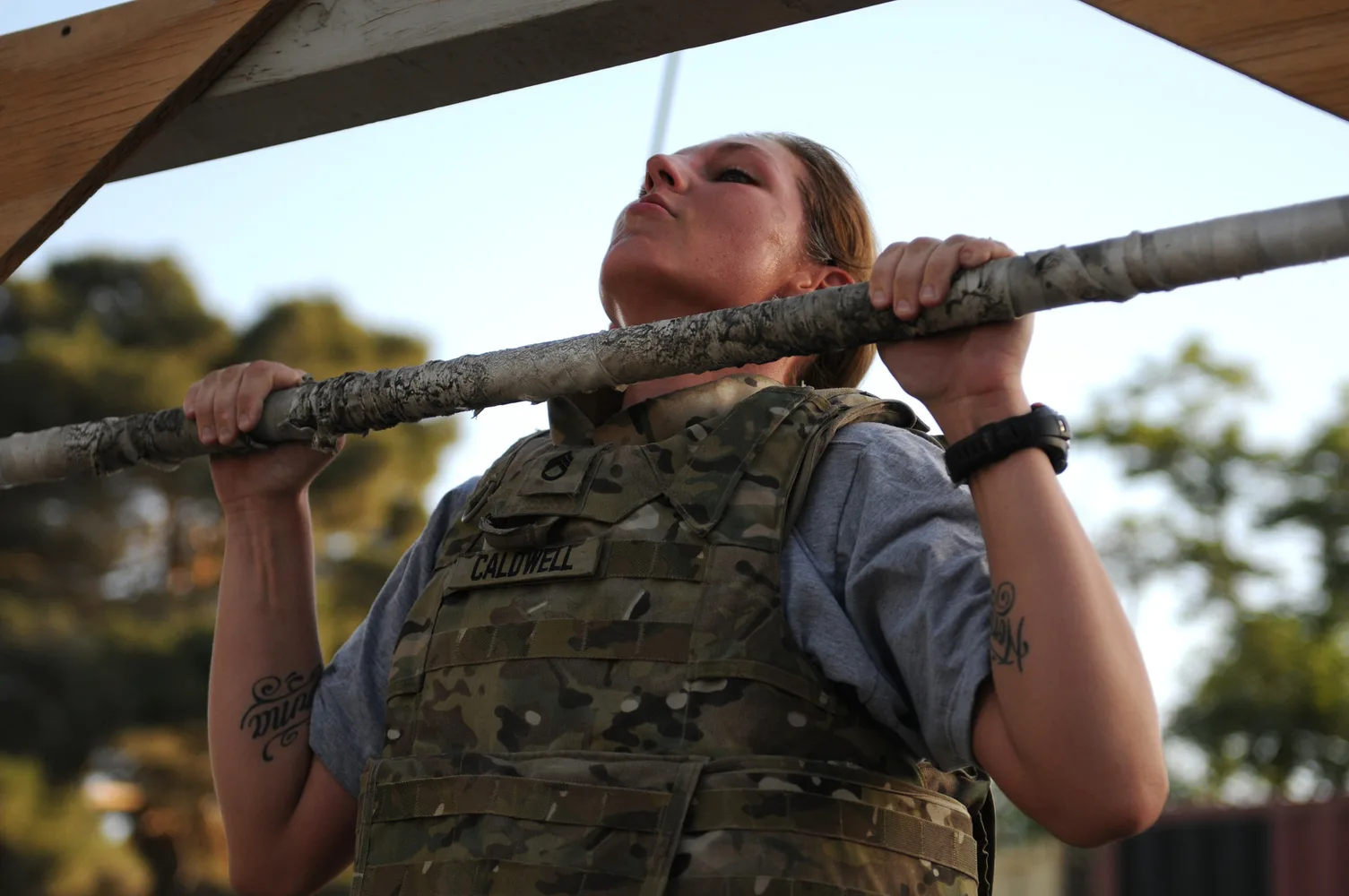
WSF rule context matters because weighted pull-ups and dips require strict judging to produce meaningful records. Source: Wikimedia Commons.

A streetlifting number is easy to misunderstand.
Someone says they dipped 120 kg or pulled up with 80 kg. The video looks strong. The comments approve. But the result is still incomplete until you know the rules: start position, commands, depth, chin position, weight attachment, whether straps were allowed, bodyweight class, age category, doping-control status, record category, and which federation recognized it.
The World Streetlifting Federation, usually shortened to WSF, is one of the systems trying to make those details explicit.
WSF is not just a name attached to weighted pull-ups and dips. Its public site contains technical rules, rank standards, records, ratings, protocols, competition regulations, calendars from 2019 through 2026, doping-control documents, leadership pages, regional representatives, referee and secretary certification, and applications for competition entry, sports titles, record certificates, judging certificates, and new federation branches. That is the infrastructure layer of a young sport.
This article explains what WSF is, what its rules appear to emphasize, how its records and doping-tested categories work, why Kirill Sarychev's name matters, how WSF differs from ISF, and what an athlete should check before treating a WSF number as comparable to another streetlifting result.
For the sport-level overview, start with Streetlifting. For the other major streetlifting federation covered here, read ISF. For the strength-sport model that streetlifting keeps borrowing from, see Powerlifting and Powerlifting History.
The WSF in one sentence
The World Streetlifting Federation is a streetlifting federation built around weighted pull-ups, weighted dips, two-lift streetlifting totals, Multilift repetition events, rank standards, records, and a separation between ordinary and doping-tested result categories.
The short version:
- Core lifts: pull-ups or chin-ups with additional weight, and parallel-bar dips with additional weight.
- Main total: streetlifting as a double event: pull-up plus dip.
- Other events: single pull-up, single dip, Multilift pull-up, Multilift dip, and many-repetition streetlifting totals.
- Records: WSF publishes world, European, and other record pages; record categories include regular and DT variants.
- Rules: WSF publishes technical rules through its official site; older indexed rulebook text describes WSF as an independent sport organization whose aim is to popularize streetlifting.
- Doping-control documents: WSF publishes anti-doping rules, a prohibited list for tested divisions, and a list of disqualified athletes for anti-doping violations.
- Leadership: the WSF leadership page lists Kirill Sarychev as president and founder of WSF, and Sergey Dluzhnevsky as WSF vice president and president of WSF Russia.
The useful mental model is simple: WSF is the streetlifting federation most visibly tied to the Russian powerlifting federation ecosystem and to Kirill Sarychev's strength-sport brand. That gives it organizational reach and recognizable leadership, but it also means readers need to separate verified federation documents from marketing claims.
Why WSF exists
Streetlifting needs more than strong athletes. It needs repeatable conditions.
Without a federation, a weighted pull-up can be judged many ways. Some gyms accept a chin near the bar. Some require the chin clearly over the bar. Some allow swing if the rep is strong enough. Some require a dead hang. Some allow straps. Some allow mixed grip. Some treat a chin-up and a pull-up as equivalent; others separate them.
The dip has the same problem. One athlete descends until the upper arm is roughly parallel. Another goes deeper. One locks out cleanly. Another finishes with soft elbows. One keeps the body motionless. Another uses bounce and forward lean. All of these may be useful training variations. They cannot all be record standards.
WSF exists to turn those gym movements into competition movements.
Its public navigation tells the story: rules, standards, records, ratings, regulations, protocols, statistics, doping control, assigned titles, orders, leadership, regional representatives, referee corps, secretary corps, coaching staff, and federation development. That is not just a website menu. It is a map of what the sport has to build if it wants results to mean something after the video disappears from a feed.
The comparison with powerlifting is direct. Powerlifting did not become a global sport because people discovered squats, bench presses, and deadlifts. It became a sport when federations standardized the total. Streetlifting is going through a similar process, but with weighted calisthenics movements instead of barbell lifts.
What the WSF rulebook says the sport is
The WSF technical rules page links to the federation's technical rules. Indexed rulebook text describes WSF as an independent sports organization whose main aim is to popularize streetlifting in the world. It also says the technical rules are the main document for organizing and running WSF championships, and that athletes, coaches, and officials must know and follow them.
The same indexed rulebook text recognizes two competition lifts:
- pull-ups or chin-ups;
- parallel-bar dips.
It also lists several competition divisions:
- double event: pull-ups and dips with additional weight for maximum result;
- pull-ups for maximum result;
- dips for maximum result;
- pull-ups for repetitions with fixed weights;
- pull-ups for repetitions without fixed weight;
- dips for repetitions with fixed weights;
- dips for repetitions without fixed weight.
That matters because WSF is not only one maximum-weight total. Like ISF, it includes both maximum-strength and repetition-strength lanes. A one-rep pull-up with heavy additional weight and a fixed-weight repetition set are related, but they are not the same athletic test.
The practical implication: when someone says "WSF streetlifting result," ask which discipline they mean. A two-lift total, a single pull-up, a single dip, a Multilift result, and a many-repetition total are different events.
Pull-ups under WSF rules
The indexed WSF rulebook text for pull-ups on maximum gives several useful details.
The athlete hangs on the bar facing the front of the platform. The arms must be fully extended at the elbows in the starting position. Swinging is not allowed. Bending the knees is acceptable. Direct and reverse grip are allowed, as are open and closed grip. Mixed grip, wrist straps, and gymnastic hooks are prohibited. The exercise begins on the senior judge's "Start" command.
For the top position, the text says the athlete moves upward until the tip of the chin is above the crossbar and, in side projection, the chin must go beyond the crossbar forward or be above it. The athlete then returns to the starting position and finishes only after the "Rack" command.
Those details answer several questions that gym videos often leave open:
- A soft-elbow start is not the same as a competition start.
- A rep with visible swing is vulnerable.
- Straps and hooks are not part of the maximum pull-up standard described in the rulebook.
- The chin position is not just a front-view impression.
- Commands matter.
This is why streetlifting is harder to judge than it looks. A heavy pull-up can be strong and still fail as a federation attempt. Strength is necessary, but it is not sufficient.
Dips under WSF rules
The indexed WSF rulebook text for dips on maximum is equally specific.
The athlete starts in an upright position on the parallel bars, with the arms fully extended. The athlete cannot touch the platform or fixed parts of the equipment except by gripping the bars. Assistants may help with loading, unloading, and assuming the starting position, but they cannot support the athlete during the lift. Hand straps and gymnastic hooks are prohibited.
After the senior judge's "Start" command, the athlete flexes the arms and moves downward until the upper surface of the posterior deltoid bundle is lower than the upper point of the elbow joint. Then the athlete must return independently to the starting position and receive the command to finish.
The important point is depth. The WSF dip standard is not simply "bend the elbows." It is a defined relationship between the shoulder area and the elbow joint. That makes the result more comparable, but it also creates judging friction. Athletes who train high, bounced, or unstable dips may be strong enough for the load and still miss the attempt.
A useful rule of thumb: if your training dip would need a favorable camera angle to look legal, it is not ready for strict competition.
The double event: WSF's streetlifting total
The simplest WSF streetlifting result is the double event: pull-up plus dip.
This total is why streetlifting is often described as a bodyweight cousin of powerlifting. The sport takes two measurable upper-body movements, adds external load, and combines the best successful results into one number. The pull-up tests pulling strength, grip, and control. The dip tests pressing strength, shoulder tolerance, triceps strength, and lockout. Together they produce a compact upper-body strength total.
But the total can hide asymmetry.
One athlete may have a world-class dip and a merely good pull-up. Another may be balanced. Another may pull well but lose too much ground on the dip. Standards and records are useful partly because they expose that balance. The same total can represent different athletes:
- 80 kg pull-up + 120 kg dip = 200 kg total.
- 100 kg pull-up + 100 kg dip = 200 kg total.
- 65 kg pull-up + 135 kg dip = 200 kg total.
Those totals are equal on paper. They do not describe the same athlete. For training, the event split matters more than the total alone.
Multilift and repetition events
WSF record pages list more than maximum pull-up, maximum dip, and double-event streetlifting. They also list Multilift pull-up, Multilift dip, and streetlifting totals "to many reps." The record pages include regular categories and DT categories.
That gives WSF two performance cultures:
- maximum-weight culture, where the athlete tries to lift the heaviest additional load;
- repetition culture, where the athlete performs repeated work with a fixed or defined load.
The difference is not cosmetic.
Maximum pull-ups and dips reward peak strength, setup precision, and successful attempt selection. Repetition events reward strength endurance, pacing, grip management, local muscular tolerance, and technical economy. A heavy single teaches one kind of pressure. A long repetition set teaches another.
This is one reason streetlifting can attract athletes from different backgrounds. A powerlifter may understand the maximum-weight format quickly. A calisthenics athlete with excellent body control and endurance may be more comfortable with repetition events. A complete streetlifter eventually needs both kinds of competence, but the federation categories allow athletes to specialize.
Standards and titles
The WSF standards page links to rank standards for the federation. The page lists standards for:
- double event;
- pull-ups on maximum;
- dips on maximum;
- many-repetition double event;
- many-repetition pull-ups;
- many-repetition dips;
- muscle-up on the bar.
For Sports Category, this is the key connection. The site is built around performance standards: numbers that help athletes understand where they are. WSF is useful because it has a rank-and-record ecosystem rather than only isolated competitions.
Still, standards should be used carefully.
A standard is not the same as a training plan. It does not tell you how quickly to gain strength. It does not tell you whether to cut weight. It does not prove that a gym rep would pass in competition. It tells you what number matters under a federation's category system.
Use standards to answer practical questions:
- What is the next realistic rank target?
- Is your pull-up or dip holding back your total?
- Does your bodyweight class make sense?
- Are you closer to success in maximum-weight events or repetition events?
- Does the standard require a tested result or a non-tested result?
Do not use standards as a substitute for rule-specific training. A number only matters if the attempt would pass.
Records and DT categories
The WSF world records page separates record categories for streetlifting total, pull-up, dip, Multilift pull-up, Multilift dip, and many-repetition streetlifting total. It also lists DT versions of those categories.
In this context, DT is best read as the doping-tested branch. WSF's doping-control page links to anti-doping rules, a prohibited list for tested divisions, and a list of athletes disqualified for anti-doping rule violations.
That split is important.
If a record has a DT label, it should not be merged casually with a non-DT result. The movement rules may be the same, but the regulatory environment is different. This is the same comparison problem that appears in powerlifting: a result with testing and a result without testing are not interchangeable just because the lift looks similar.
A useful result label should include:
- Sex.
- Bodyweight category.
- Age category.
- Event: double event, pull-up, dip, Multilift pull-up, Multilift dip, or many-repetition total.
- Added weight or fixed Multilift load.
- DT or non-DT status.
- Meet name and date.
- Rule version, especially when comparing records before and after a technical rule change.
WSF itself flags some records as set before a technical rules change on April 8, 2024. That is exactly the kind of detail readers should preserve. Rule changes can alter the meaning of records, even when the event name stays the same.
Leadership: why Sarychev matters
WSF is strongly associated with Kirill Sarychev.
The WSF leadership page lists Sarychev as president and founder of WSF. The same page describes him as a multiple champion and record holder in raw bench press, and as the holder of the all-time raw bench press record of 335 kg. His own official website presents him as a Russian powerlifter, world record holder, entrepreneur, blogger, actor, and founder/president of WRPF.
That background matters because federation credibility in young strength sports often starts with known lifters. Sarychev brings a powerlifting audience, an existing federation-building reputation through WRPF, and a clear link between streetlifting and the broader strength-sport promotion world.
But credibility by association has limits.
A famous founder can attract attention. A strong organizing team can create events. A recognizable brand can bring athletes into the system. None of that replaces the boring work: current rules, consistent judging, clear protocols, transparent records, accessible standards, and reliable anti-doping documentation.
The best way to read WSF is not "Sarychev made it, therefore every claim is settled." The better reading is: WSF has visible leadership from the powerlifting world, and that leadership gives the federation a platform. The federation's long-term value still depends on documentation and execution.
WSF and ISF: similar sport, different emphasis
WSF and ISF cover overlapping territory. Both deal with weighted pull-ups, weighted dips, standards, records, and the problem of making streetlifting results comparable. Both use Classic-like maximum-weight logic and repetition-based formats. Both publish rule and record material.
The difference is emphasis.
ISF reads more like a rulebook-and-committee federation. Its public pages emphasize formal rules, standards, committees, congress material, and international structure.
WSF reads more like a federation connected to an active competition calendar and the Russian strength-sport promotion ecosystem. Its site has calendars, protocols, records, standards, doping-control documents, applications, regional representatives, and leadership pages that overlap with powerlifting and allied strength sports.
That does not make one automatically better. It means athletes should ask operational questions:
- Which federation has meets near me?
- Which rulebook is used at the meet I will enter?
- Which records matter for my goals?
- Is the result DT or non-DT?
- Are protocols public and easy to find?
- Are the judges trained under that federation's rules?
- Did a technical rule change affect the record category I am comparing against?
The federation that matters is the one whose rules will judge your attempt.
What choosing WSF means for an athlete
Choose a WSF event if you value:
- a federation with visible competition calendars and published protocols;
- weighted pull-up and dip standards;
- double-event streetlifting totals;
- separate records for pull-up, dip, total, Multilift, and repetition events;
- DT and non-DT record branches;
- a federation connected to established Russian powerlifting organizers;
- a pathway for rank, record, judging, and secretary certification paperwork.
The trade-offs are real:
- much of the public information is in Russian or linked through cloud-hosted documents;
- WSF is still part of a young, fragmented streetlifting landscape;
- records before and after technical rule changes need context;
- DT status must be checked rather than assumed;
- local meet execution may matter as much as written rules;
- a strong gym lift can fail if it does not match WSF commands and judging standards.
The last point is the practical one. Training strength and competition strength are not the same. The meet decides through rules, commands, and judges.
How to prepare for a WSF-style meet
A practical preparation sequence:
- Read the current WSF technical rules. Focus on commands, start position, top position, depth, equipment, and prohibited aids.
- Confirm your event. Double event, pull-up only, dip only, Multilift, and many-repetition formats require different preparation.
- Check whether the meet is DT or non-DT. This affects how the result will be classified.
- Train with the exact belt and loading setup you will use. Hanging weight changes balance.
- Film from side and front angles. Pull-up chin position and dip depth can look different depending on camera angle.
- Practice commands. Do not finish early because a training partner would have counted the rep.
- Plan attempts conservatively. A missed opener in a young judged sport can turn a strong day into no total.
- Check protocols after the meet. Make sure the result appears where you expect it to appear.
The decision heuristic: if the rulebook would reject the rep, the federation will not care that your gym counted it.
Where WSF fits in streetlifting
WSF is the competition-and-record lane of streetlifting most visibly connected to Kirill Sarychev and the Russian strength-sport federation ecosystem. It gives athletes a structure for weighted pull-up and dip performance, rank standards, records, DT categories, and event calendars.
Its strongest feature is not that it makes streetlifting look exciting. Excitement is easy. Its strongest feature is that it exposes the administrative pieces streetlifting needs if it wants to be more than a collection of strong videos: rules, protocols, records, standards, judges, secretaries, doping-control documents, and category labels.
Its challenge is the same challenge every young strength federation faces. The sport grows only if athletes can trust the numbers. Trust comes from consistent rules, current documents, public protocols, stable records, and clear distinctions between tested and non-tested contexts.
WSF is one answer to the federation problem in streetlifting. It is not the only answer, and it should not be read without context. But for athletes who care about WSF standards, WSF records, and the Sarychev-linked competition ecosystem, it is a major part of the sport's current map.
Where to go next
- For the full sport overview, read Streetlifting.
- For the other major streetlifting federation article, read ISF.
- For the closest three-lift strength-sport comparison, read Powerlifting.
- For how federations shape records over time, read Powerlifting History.
- For a mature international federation model with strict technical rules and anti-doping obligations, read IPF.